
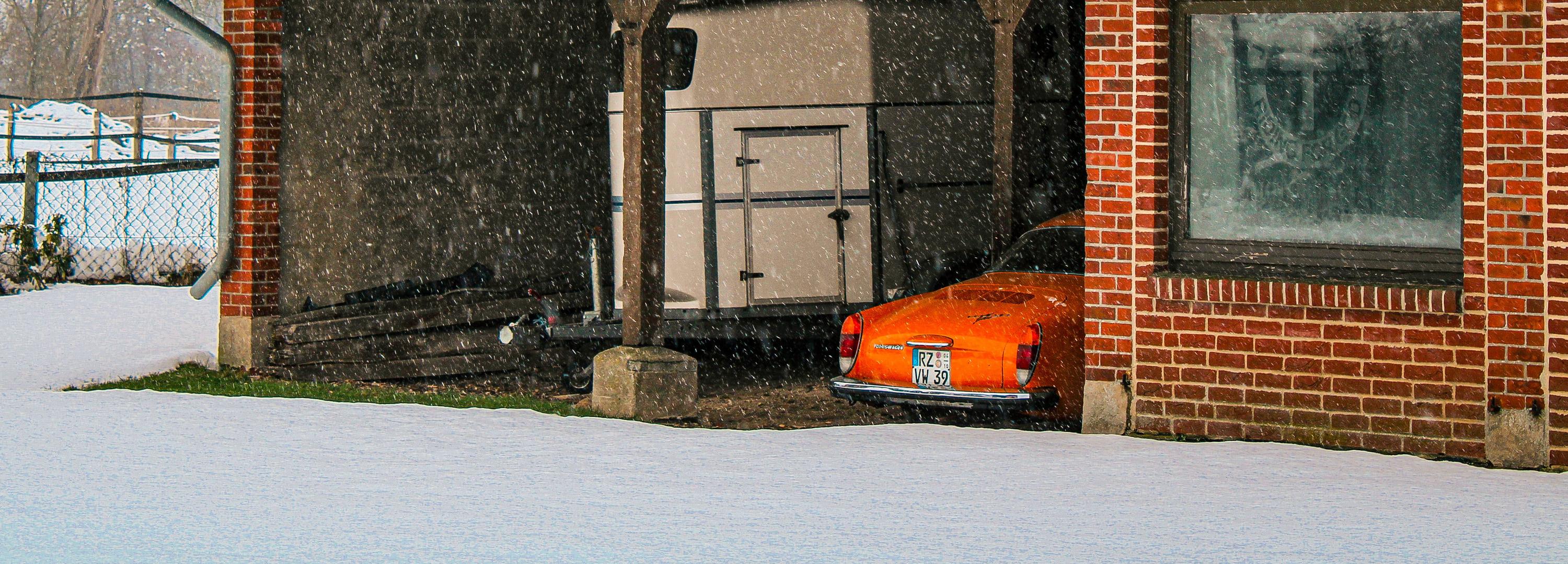
It’s time to start thinking about preparing our cars for the winter. I know that this is an unpleasant task, but there are two reasons to do it now. First, procrastinating until the spring will cause problems or damage to your car. Second, it has to be done anyway, so why not do it now, comfortable in the knowledge that your car is properly prepared for the winter.
Some of us use our collector cars occasionally during the winter, while others prefer to place them in hibernation until the spring. The longer your car will sit unused, the more you need to do to safeguard it.
If you will be using your car on a weekly basis:
- Change the oil and filter. The oil in your crankcase is filled with acids and other corrosives that can actually etch critical parts of your engine such as the crankshaft.
- Check your anti-freeze to make sure that it’s good down to zero degrees. I know all about global warming, but it can still get down to zero degrees in our area.
- Make sure that your tires are properly inflated. As the temperature drops, so will the air pressure in your tires, and you need to compensate for this.
- Fill your fuel tank to the top. Air contains moisture, and the less air in the tank, the less moisture. The air in the winter is relatively dry. Not so in the fall and the spring.
If you will be using your car on a monthly basis do all of the above plus:
- Add a fuel stabilizer such as Sta-Bil to your fuel. Even if you use your car monthly there’s a good chance that you won’t use a full tank of gas over the winter.
If you will be storing your car until spring do all of the above plus:
- Inflate your tires to the maximum pressure listed on the sidewall. This will help to prevent “flat spotting.”
- “Fog Out” your engine. This is much easier with a helper. Remove the air cleaner cover to allow access to the carburetor. With the engine up to full operating temperature have your helper keep the engine revved to about 2500 RPM. Slowly but steadily pour Marvel Mystery Oil, or fogging oil into the carburetor. Do not pour enough in to cause the engine to stall. After a few seconds you will see billows of white smoke coming out of the exhaust (this is my favorite part). When this occurs have your helper release the throttle and shut the ignition, while at the same time stop pouring oil into the carburetor. This will leave a coating of fresh protective oil on every internal part of your engine from the intake, to the valves, to the cylinders and finally to the exhaust.
- Disconnect the negative battery terminal and attach your battery to a “battery maintainer.” It is virtually impossible for a fully charged battery to freeze, and you will be isolating the electrical system preventing a possible electrical fire.
This guide is not a substitute for routine maintenance or any necessary repairs. If your car requires maintenance or repairs, this is a good time to do it. Finally, do a thorough detailing job on the interior and exterior of your car. This way, in the spring all you’ll have to do is reconnect your negative battery cable and you’ll be ready for another season of motoring pleasure. This looks like a long list, but in reality it only takes a couple of hours, which is a small price to pay for a winter’s worth of peace of mind.
Tips From Readers
Keep it simple. I have a 1926 Ford Pickup. Change the oil, turn off the fuel, run the carburetor dry, and hook up the battery maintainer. In the spring it starts right up. KB
I have a 1967 MGB. During the winter it is a good idea to lay some poly sheeting under the car to act as a vapor barrier. This is a simple cheap way to keep the underside dry and allow it to get ventilation. Duct tape it to the floor to prevent slippage. Mitch
Stuff rags into your exhaust pipe(s) to prevent moisture from entering. John
Spray silicone spray all over your engine compartment and wiring. This will keep moisture out of electrical connections and prevent surface rust. Joey
By Steve Linden